
Editor’s note: This article is adapted from a conversation with Frank Shushok on the Illumination Podcast. To hear the full discussion, listen to the episode here.
For generations, higher education has largely been built around a simple assumption: learners enter college, complete a degree and move into the workforce. But today's reality looks very different. Learners are increasingly navigating careers that evolve over time, balancing education alongside work and family responsibilities, and seeking new skills at multiple points throughout their lives.
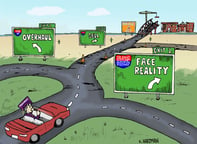
As a result, institutions are being challenged to rethink how learners engage with education—not as a one-time experience, but as a lifelong journey. The key to that transformation lies in creating seamless on-ramps, off-ramps and return pathways that make it easier for learners to enter, pause and re-engage with education as their needs change.
One of the biggest barriers to this vision is the longstanding divide between vocational and technical education on one hand and traditional degree pathways on the other. For too long, learners have been encouraged to choose a single track early in life, despite the reality that careers are rarely linear. People discover new interests, face changing economic circumstances and often pursue entirely new professional directions as they move through different stages of life.
Recognizing this reality requires institutions to create more flexible educational ecosystems. Rather than viewing credentials as fixed destinations, colleges and universities can offer multiple entry and exit points that allow learners to build skills over time. A learner might begin taking college courses while still in high school, pursue an associate degree, transition into the workforce, return later for a bachelor's degree and eventually seek a graduate credential or professional certification. At each stage, the pathway should remain open.
Creating these opportunities means expanding the traditional role of higher education institutions. Increasingly, colleges are developing partnerships with K-12 schools, community colleges, workforce organizations and employers to create interconnected learning pathways. These partnerships give learners more options and reduce the friction often associated with changing educational or career directions.
Equally important is rethinking what happens when learners step away from education.
Millions of Americans have some college experience but no completed credential. Many left because of financial pressures, family responsibilities, career opportunities or other life circumstances. Yet returning to education often involves navigating complex processes, readmission requirements and financial barriers that can discourage learners before they even begin.
To better support returning learners, institutions must examine the policies and practices that unintentionally create obstacles. Simplifying re-enrollment processes, offering flexible delivery formats, creating price points that reflect different learner circumstances and recognizing prior learning can all help make re-entry feel less like starting over and more like continuing a journey already underway.
At its core, this shift requires a learner-centered approach. Rather than asking learners to adapt to institutional structures, institutions must adapt to learners' realities. That starts with understanding individual goals, identifying barriers and designing pathways that align with a learner's personal circumstances, pace and aspirations.
This approach also extends beyond the learner to the workforce itself. Labor market demands are evolving rapidly, creating opportunities for institutions to serve as connectors between education and employment. By understanding workforce needs and developing credentials, certificates and experiential learning opportunities that align with those needs, colleges can help learners make successful career pivots while addressing talent shortages across industries.
The institutions that thrive in the years ahead will be those that embrace this flexibility. They will continuously redesign programs, pathways and learner experiences to respond to changing workforce demands and learner expectations. Most importantly, they will recognize that education is no longer confined to a single chapter of life.
The modern learner's journey is rarely linear. By creating seamless on-ramps, off-ramps and return pathways, colleges and universities can ensure learners have the opportunity to build skills, earn credentials and pursue new opportunities whenever life calls for it. In doing so, they will not only support individual success but also strengthen communities, economies and the workforce for generations to come.
You Might Also Like