Current Position and Past Experience
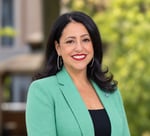
Teresita A. Levy is the Associate Provost for Experiential Learning and Executive Director for Industry Partnerships at Lehman College, where she also serves as an Associate Professor. A trained historian and quantitative researcher, Professor Levy’s academic work focuses on the economic history of the Spanish Caribbean, with teaching and research interests spanning Latin America, the Caribbean, and their diasporas.
Previously, Professor Levy served as Executive Director of International Programs and Community Engagement, Interim Dean of the School of Arts and Humanities, and Chair of the Department of Latin American and Latino Studies at Lehman College. She has also served as a Board Member of the Center for Latin American, Caribbean and Latino Studies.
In addition to her academic and administrative leadership, Professor Levy brings more than 20 years of experience as a qualitative researcher, conducting in-depth interviews and moderating focus groups in English and Spanish across the United States. Her work has supported government agencies, nonprofit organizations, and major corporations, including the NYC Office of Emergency Management, NYC Department of Health, Planned Parenthood, the Ford Foundation, the Gates Foundation, Google, Facebook, McDonald's, and Citibank. Her research expertise includes diversity, equity, and inclusion, as well as sensitive topics related to sexuality, health, education policy, and caregiving.
Education, Honors, and Achievements
Professor Levy holds a Ph.D. and M.Phil. in History from The Graduate Center of the City University of New York, an M.S. in Counseling from Long Island University, C.W. Post Campus, and a B.A. in Latin American and Caribbean Studies from Rollins College.
She is the author of Puerto Ricans in the Empire: Tobacco Growers and U.S. Colonialism, published by Rutgers University Press in 2014. Her book examines Puerto Rican tobacco growers' role in shaping their relationship with the United States, arguing that Puerto Ricans actively demanded and secured inclusion in the U.S. empire on terms shaped by both colonial authorities and the colonized.
Her ongoing research explores the contemporary state of Puerto Rico's tobacco industry, drawing on fieldwork and engagement with farmers, producers, and cigar shop owners.